Basic info: Mars is 4th planet from the Sun. It is 2nd smallest planet. I would be 3rd smallest if some guys in 2006 didn't make Pluto dwarf planet. Its surface is terrestrial. It has 2 moons phobos and Deimos. Its atmosphere is made out of 96% CO2, < 2% Ar, < 2% N2 and < 1% others.
Now let's take a look at some numbers:
- Diameter: 4,220 mi
- Average distance from Sun: 142,000,000 mi
- Temperature range: -285F to 88F
- Gravitational force: 37.5% of Earths
- Day lenght: 24 hrs 40 min
- Land mass: 144.8M km2
- People: 0
Facts: The bright rust color Mars is known for is due to iron-rich minerals in its regolith — the loose dust and rock covering its surface.
The cold, thin atmosphere means liquid water likely cannot exist on the Martian surface for any length of time.
The Red Planet is home to both the highest mountain and the deepest, longest valley in the solar system. Olympus Mons is roughly 17 miles (27 kilometers) high, while the Valles Marineris system of valleys — named after the Mariner 9 probe that discovered it in 1971 — reaches as deep as 6 miles (10 km) and runs east-west for roughly 2,500 miles (4,000 km).
Mars also has the largest volcanoes in the solar system, Olympus Mons being one of them. The massive volcano, which is about 370 miles (600 km) in diameter. Olympus Mons is a shield volcano. Mars also has many other kinds of volcanic landforms, from small, steep-sided cones to enormous plains coated in hardened lava. Some minor eruptions might still occur on the planet.
On red planet's poles scientists have found water 2 meters under the surface. It is very good sign for future colonies and Martian terraformation. We wouldn't have to cary all watter with us, instead we would make it there.
Mars currently has no global magnetic field, but there are regions of its crust that can be at least 10 times more strongly magnetized than anything measured on Earth, which suggests those regions are remnants of an ancient global magnetic field.
Mars likely has a solid core composed of iron, nickel and sulfur. The mantle of Mars is probably similar to Earth's in that it is composed mostly of peridotite, which is made up primarily of silicon, oxygen, iron and magnesium. The crust is probably largely made of the volcanic rock basalt, which is also common in the crusts of the Earth and the moon, although some crustal rocks, especially in the northern hemisphere,may be a form of andesite, a volcanic rock that contains more silica than basalt does.
Scientists think that on average, the Martian core is between 1,800 and 2,400 miles in diameter (3,000 and 4,000 km), its mantle is about 900 to 1,200 miles (5,400 to 7,200 km) wide and its crust is about 30 miles (50 km) thick.
Now some comparing to Earth:

And now last but not least, human missions to Mars after 2023: There are a lot of missions planned, so human can step onto the martian surface.
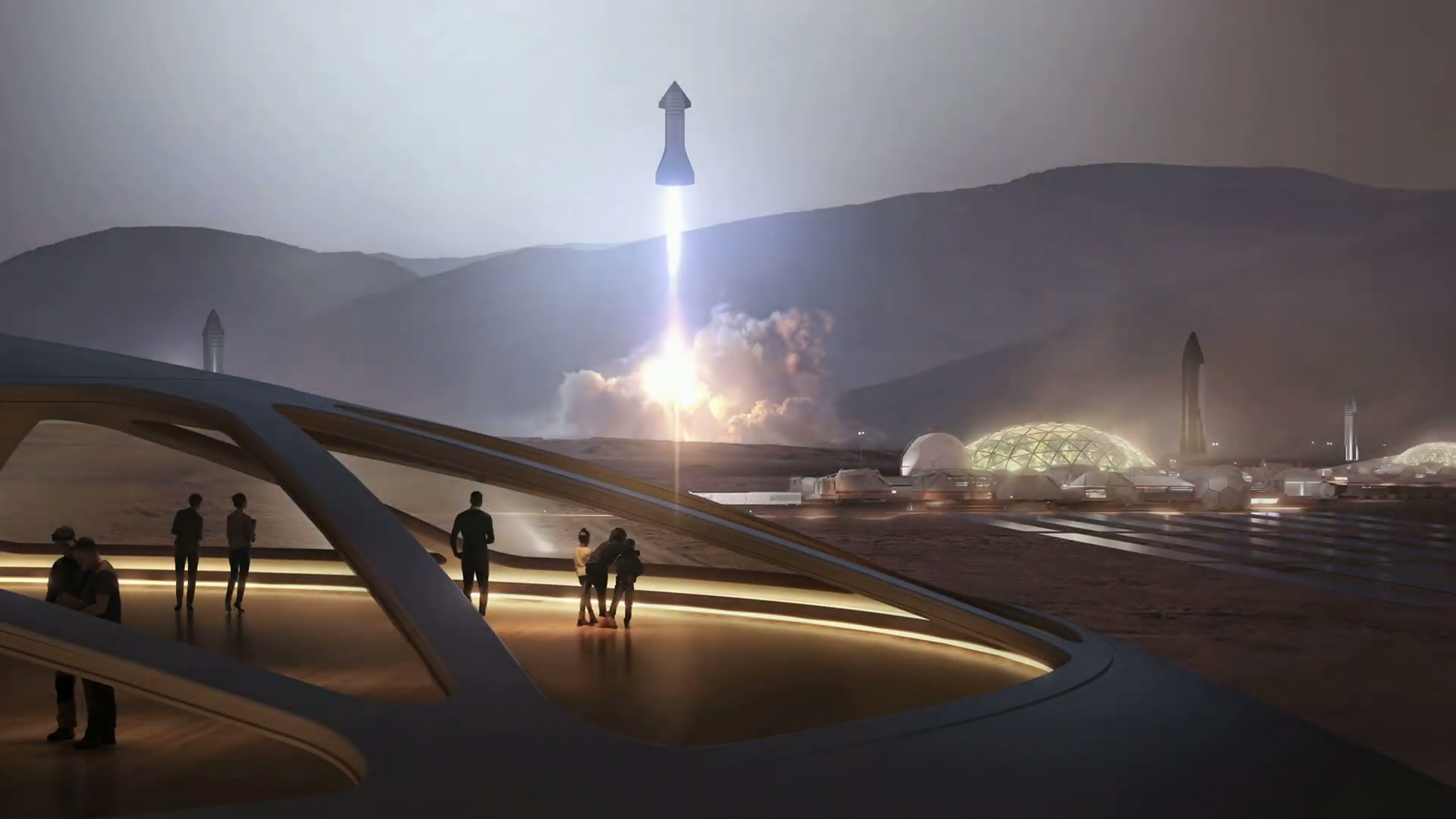
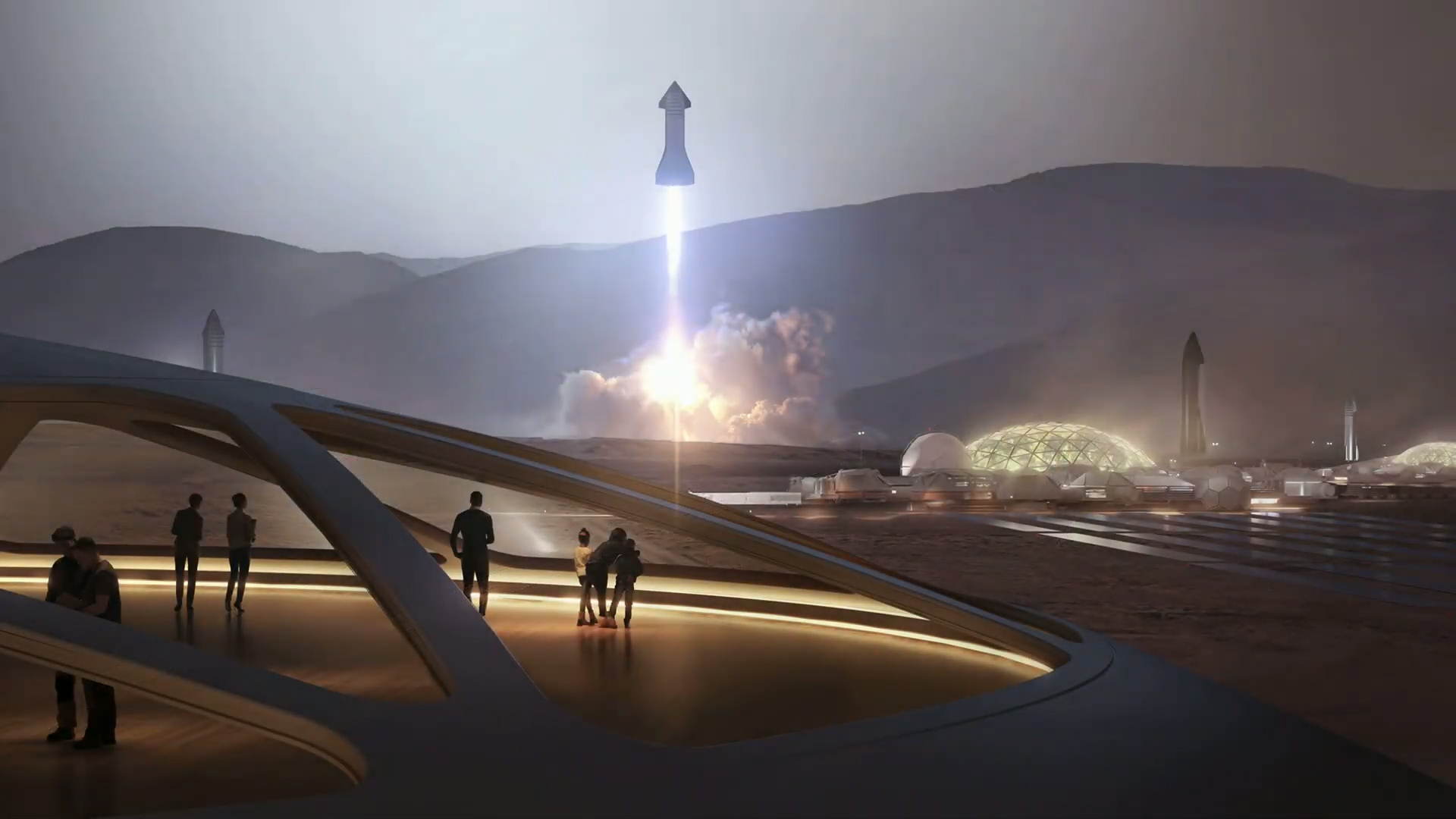
Most likely to happen are SpaceX's Starship missions. There is even optimistic expectancy that you would be able to
purchase a ticket for only around $200k - $300k.
Resources: Space.com and Spacex.com
|